Weather Alert in Oregon
Frost Advisory issued April 1 at 9:44PM PDT until April 3 at 10:00AM PDT by NWS Portland OR
AREAS AFFECTED: North Oregon Coast Range Lowlands; Central Oregon Coast Range Lowlands; North Oregon Coast Range; Central Oregon Coast Range; Lower Columbia River; Tualatin Valley; West Hills and Chehalem Mountains; Outer Southeast Portland Metro; West Central Willamette Valley; East Central Willamette Valley; West Columbia River Gorge of Oregon above 500 ft; Clackamas County Cascade Foothills; Willapa Hills; Cowlitz County Lowlands; North Clark County Lowlands; South Washington Cascade Foothills
DESCRIPTION: * WHAT...Temperatures as low as 33 to 36 will result in frost formation. * WHERE...Northern and Central Coast Range Valleys and Mountains of Oregon, Lower Columbia River and Cowlitz River Valleys, Portland Metro Hills, Central Willamette Valley, Tualatin Valley, West Columbia River Gorge of Oregon above 500 ft, Clackamas County Cascade Foothills, Willapa Hills, North Clark County Lowlands, and South Washington Cascade Foothills. * WHEN...From 9 PM Thursday to 10 AM PDT Friday. * IMPACTS...Frost could harm sensitive outdoor vegetation. Sensitive outdoor plants may be killed if left uncovered.
INSTRUCTION: Take steps now to protect tender outdoor plants from the cold. Consider temporarily moving outdoor potted plants indoors if they are sensitive to cold temperatures. Consider temporarily covering sensitive plants with a lightweight cotton fabric (i.e., bedsheets, thin blankets), as this will help retain heat and provide frost protection for your plants.
Want more detail? Get the Complete 7 Day and Night Detailed Forecast!
Current U.S. National Radar--Current
The Current National Weather Radar is shown below with a UTC Time (subtract 5 hours from UTC to get Eastern Time).

National Weather Forecast--Current
The Current National Weather Forecast and National Weather Map are shown below.

National Weather Forecast for Tomorrow
Tomorrow National Weather Forecast and Tomorrow National Weather Map are show below.

North America Water Vapor (Moisture)
This map shows recent moisture content over North America. Bright and colored areas show high moisture (ie, clouds); brown indicates very little moisture present; black indicates no moisture.

Weather Topic: What is Rain?
Home - Education - Precipitation - Rain
 Next Topic: Shelf Clouds
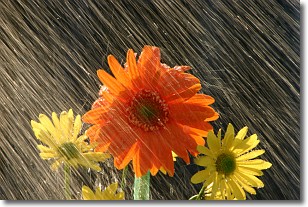
Precipitation in the form of water droplets is called rain.
Rain generally has a tendency to fall with less intensity over a greater period
of time, and when rainfall is more severe it is usually less sustained.
Rain is the most common form of precipitation and happens with greater frequency
depending on the season and regional influences. Cities have been shown to have
an observable effect on rainfall, due to an effect called the urban heat island.
Compared to upwind, monthly rainfall between twenty and forty miles downwind of
cities is 30% greater.
Next Topic: Shelf Clouds
Weather Topic: What is Sleet?
Home - Education - Precipitation - Sleet
 Next Topic: Snow
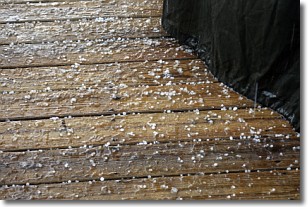
Sleet is a form of precipitation in which small ice pellets are the primary
components. These ice pellets are smaller and more translucent than hailstones,
and harder than graupel. Sleet is caused by specific atmospheric conditions and
therefore typically doesn't last for extended periods of time.
The condition which leads to sleet formation requires a warmer body of air to be
wedged in between two sub-freezing bodies of air. When snow falls through a warmer
layer of air it melts, and as it falls through the next sub-freezing body of air
it freezes again, forming ice pellets known as sleet. In some cases, water
droplets don't have time to freeze before reaching the surface and the result is
freezing rain.
Next Topic: Snow
Current conditions powered by WeatherAPI.com