Weather Alert in Colorado
Avalanche Advisory issued February 19 at 5:31PM MST by NWS Denver CO
AREAS AFFECTED: Elkhead and Park Mountains; Grand and Battlement Mesas; Gore and Elk Mountains/Central Mountain Valleys; West Elk and Sawatch Mountains; Northwestern San Juan Mountains; Southwest San Juan Mountains; West Jackson and West Grand Counties Above 9000 Feet; South and East Jackson/Larimer/North and Northeast Grand/Northwest Boulder Counties Above 9000 Feet; South and Southeast Grand/West Central and Southwest Boulder/Gilpin/Clear Creek/Summit/North and West Park Counties Above 9000 Feet; Western Mosquito Range/East Lake County Above 11000 Ft; Eastern Sawatch Mountains above 11000 Ft; Western Chaffee County Between 9000 and 11000 Ft; Eastern San Juan Mountains Above 10000 Ft
DESCRIPTION: SABCO THE FOLLOWING MESSAGE IS TRANSMITTED AT THE REQUEST OF THE COLORADO AVALANCHE INFORMATION CENTER. A SPECIAL AVALANCHE ADVISORY IN EFFECT FROM THURSDAY EVENING THROUGH SUNDAY *WHATit is very easy for people to trigger large and deadly avalanches through the weekend. *WHEREthe Elkheads, Park Range, Flat Tops, Front Range, Gore Range, 10-Mile Range, Grand Mesa, Sawatch, West Elk, Elk Mountains, San Juan Mountains. *WHENDangerous avalanche conditions exist through Sunday. *IMPACTSLarge and dangerous avalanches will be easy to trigger. *PRECAUTION/PREPAREDNESS ACTIONS Travel in backcountry avalanche terrain requires careful planning and cautious route-finding to stay safe. Many slopes that were safe earlier this winter are now dangerous. Avoid travel on and under slopes with a slope angle steeper than about 30 degrees. You can find more detailed information at colorado.gov/avalanche Pritchett
INSTRUCTION: N/A
Want more detail? Get the Complete 7 Day and Night Detailed Forecast!
Current U.S. National Radar--Current
The Current National Weather Radar is shown below with a UTC Time (subtract 5 hours from UTC to get Eastern Time).

National Weather Forecast--Current
The Current National Weather Forecast and National Weather Map are shown below.

National Weather Forecast for Tomorrow
Tomorrow National Weather Forecast and Tomorrow National Weather Map are show below.

North America Water Vapor (Moisture)
This map shows recent moisture content over North America. Bright and colored areas show high moisture (ie, clouds); brown indicates very little moisture present; black indicates no moisture.

Weather Topic: What are Mammatus Clouds?
Home - Education - Cloud Types - Mammatus Clouds
 Next Topic: Nimbostratus Clouds
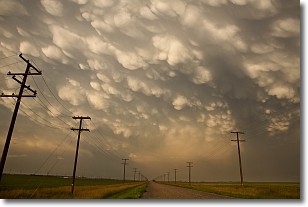
A mammatus cloud is a cloud with a unique feature which resembles
a web of pouches hanging along the base of the cloud.
In the United States, mammatus clouds tend to form in the warmer months, commonly
in the Midwest and eastern regions.
While they usually form at the bottom of a cumulonimbis cloud, they can also form
under altostratus, altocumulus, stratocumulus, and cirrus clouds. Mammatus clouds
warn that severe weather is close.
Next Topic: Nimbostratus Clouds
Weather Topic: What is Precipitation?
Home - Education - Precipitation - Precipitation
 Next Topic: Rain
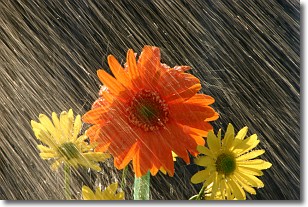
Precipitation can refer to many different forms of water that
may fall from clouds. Precipitation occurs after a cloud has become saturated to
the point where its water particles are more dense than the air below the cloud.
In most cases, precipitation will reach the ground, but it is not uncommon for
precipitation to evaporate before it reaches the earth's surface.
When precipitation evaporates before it contacts the ground it is called Virga.
Graupel, hail, sleet, rain, drizzle, and snow are forms of precipitation, but fog
and mist are not considered precipitation because the water vapor which
constitutes them isn't dense enough to fall to the ground.
Next Topic: Rain
Current conditions powered by WeatherAPI.com